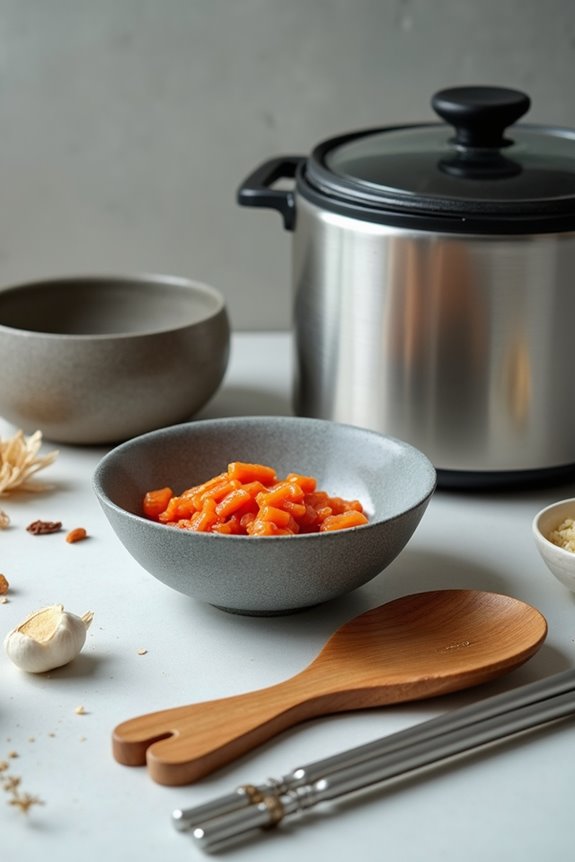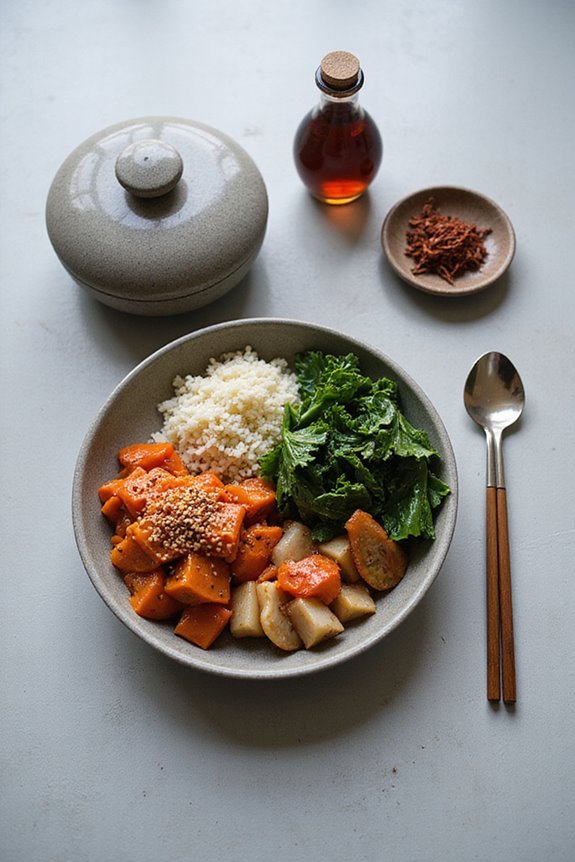
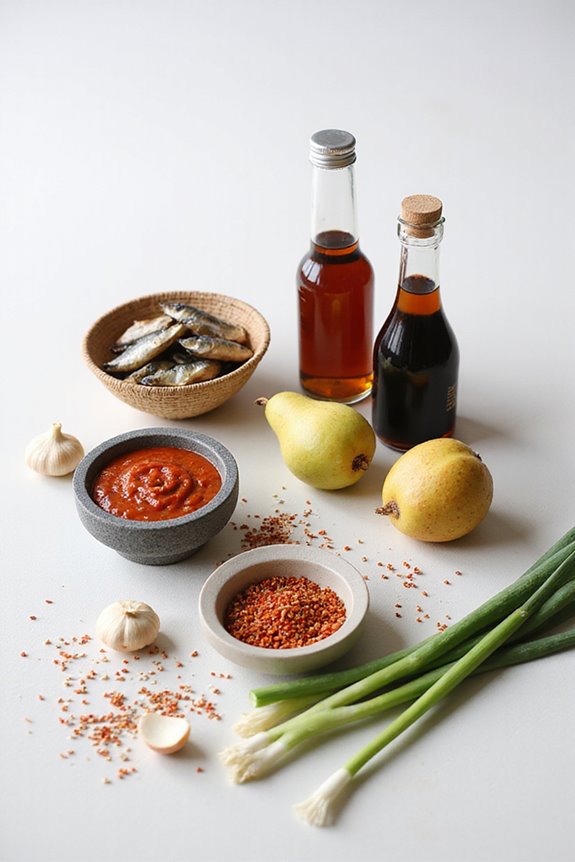

Korean cooking ingredients encompass essential spices like coarse and fine gochugaru, which are vital for heat and flavor in various dishes. Aromatic vegetables such as garlic and scallions enhance flavor depth. Oils, particularly sesame and perilla, provide unique aromas and health benefits. Grains, including short grain rice and sweet potato starch noodles, contribute texture and nutrition to meals. Fermented items like doenjang and gochujang are significant for umami and probiotics. Learn more about these diverse components.
Key Takeaways
- Essential spices like gochugaru and gochujang provide heat and depth, crucial for authentic Korean dishes.
- Common aromatics such as garlic, scallions, and ginger enhance flavors in stews and soups.
- Various oils like sesame and perilla oil are key for their unique aromas and health benefits.
- Staple grains include short grain white rice and mixed grain rice, necessary for traditional Korean meals.
- Fermented ingredients like doenjang and kimchi contribute umami flavor and promote gut health through probiotics.
Essential Spices and Seasonings
When exploring Korean cuisine, understanding fundamental spices and seasonings is essential for achieving authentic flavors in our dishes. Gochugaru varieties, specifically the coarse and fine types, serve distinct purposes in our cooking. Coarse gochugaru is primarily used in kimchi, stews, and soups, lending a robust heat and flavor complexity. Meanwhile, fine gochugaru is critical in making gochujang, a fermented chili paste we rely on for its spicy, sweet, and savory notes. Gochujang uses extend beyond sauces; it enriches marinades and enhances the depth of various dishes. Preserving these spices properly, like refrigerating gochugaru, guarantees they maintain their quality and pungency for authentic culinary experiences. Mastering these ingredients is essential for anyone keen on exploring the depths of Korean flavor.
Aromatics and Vegetables
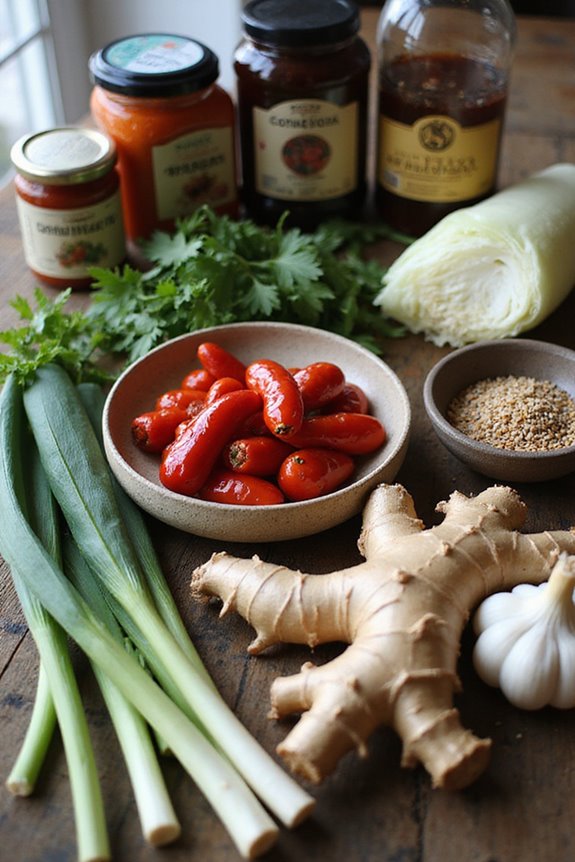
Incorporating aromatics and vegetables into our Korean dishes greatly enhances the overall flavor profile and nutritional value. Common aromatic combinations like garlic, scallions, and ginger provide essential depth to stews and soups. Scallions are notable for their pungent flavor, while garlic adds a foundational taste. We often use black pepper for its unique citrus notes.
Regarding vegetable textures, napa cabbage is crucial for creating kimchi, offering a crunchy element, while Korean zucchini’s juicy profile enhances stews. Sweet potatoes contribute sweetness, and carrots add color and nutrition. Perilla leaves infuse dishes with a minty note, complementing various flavors. Together, these ingredients markedly elevate the quality of our Korean cuisine.
Oils and Vinegars
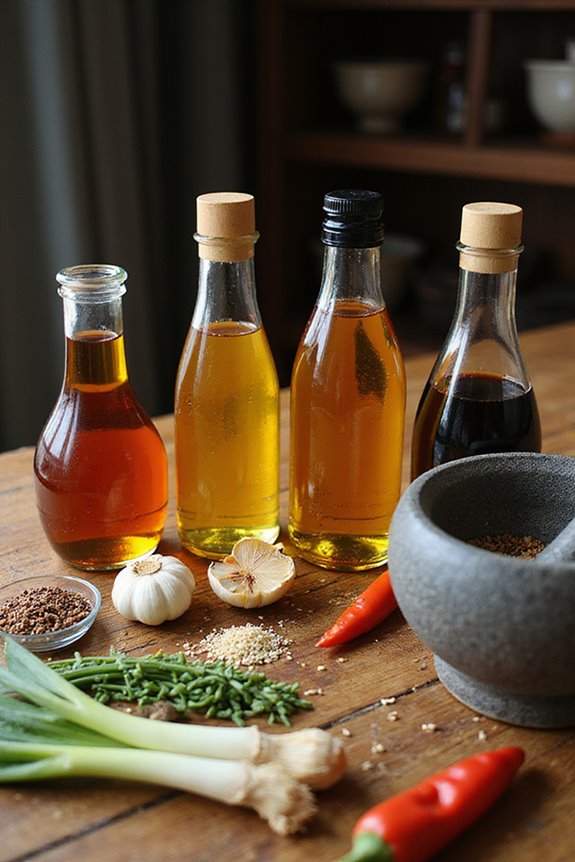
Oils and vinegars play essential roles in Korean cooking, not only enhancing flavors but also contributing to the overall health benefits of our dishes. Sesame oil, prized for its nutty aroma, provides significant health advantages, including lowering cholesterol and offering antioxidant properties. Its common use as a finishing touch in BBQ showcases its flavor-enhancing qualities. Perilla oil, known for its mild taste, is rich in omega-3 fatty acids and antioxidants, making it ideal for dressing vegetable side dishes. We often use various vinegars, like brown rice vinegar, to balance flavors in traditional recipes. Additionally, rice vinegar is versatile across many dishes, further emphasizing the importance of these ingredients in our culinary practice.
Grains and Staples
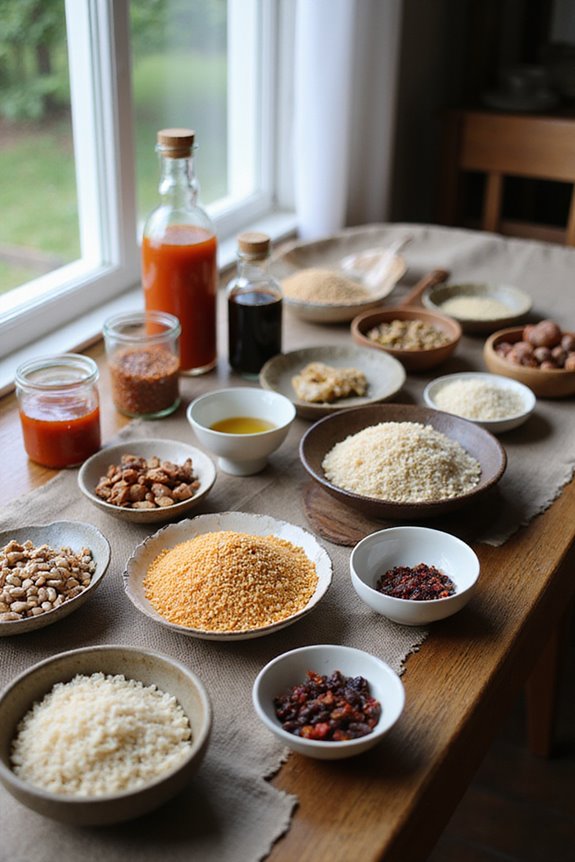
Grains and staples are fundamental components of Korean cuisine, forming the backbone of many traditional dishes. One of the most important rice varieties is short grain white rice, known for its sticky texture and slightly sweet flavor, making it perfect for daily meals. Moreover, mixed grain rice combines white rice with barley and beans, enhancing nutritional value. When it comes to noodle types, sweet potato starch noodles, also called dangmyeon, are essential in dishes like japchae. Wheat flour noodles, known as kalguksu, feature prominently in brothy soups. Additionally, buckwheat noodles, or memil guksu, are enjoyed both cold and hot, particularly during warmer months. Understanding these grains and staples allows us to appreciate the foundation of Korean culinary traditions.
Fermented and Salted Ingredients
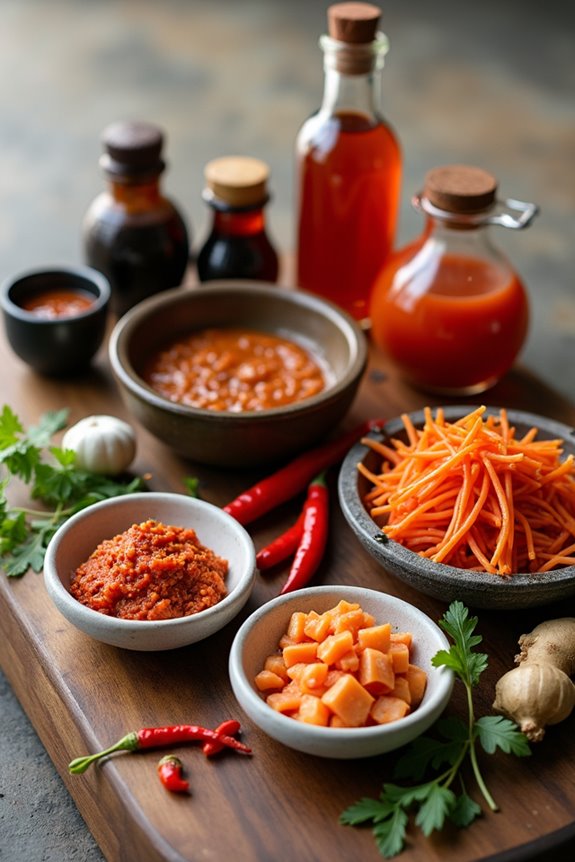
Fermented and salted ingredients are crucial elements in Korean cuisine, providing depth of flavor and preserving food. These ingredients utilize advanced fermentation techniques, which enhance their taste and nutritional value. For example, doenjang, a fermented soybean paste, serves as a savory base for various dishes, while gochujang adds both spice and umami through its sweet-spicy flavor. Salted seafood products, such as saeujeot and jeotgal, are essential for their strong umami profiles, enriching kimchi and sauces. Additionally, the fermentation process for kimchi fosters health benefits by producing probiotics that promote gut health. Overall, these unique ingredients not only contribute to the culinary richness of Korean dishes but also offer significant health advantages through their fermentation.
Proteins and Seafood
Korean cuisine showcases a diverse array of proteins and seafood, both of which play integral roles in crafting its rich flavors and textures. In our dishes, we frequently use multiple protein sources, such as beef, pork, chicken, tofu, and eggs. Each has its unique preparation methods, like bulgogi for beef or samgyeopsal for pork belly. Our seafood selection includes dried anchovies and fresh fish, which are essential for stock bases, enhancing umami through effective seafood preservation techniques. We often incorporate shellfish into soups and pancakes, adding depth to our meals. This balance of proteins and seafood not only defines our culinary identity but also underlines the importance of variety in Korean dietary practices, catering to diverse taste preferences.
Unique Korean Cooking Techniques
Cooking techniques play an essential role in the preparation of Korean dishes, shaping their flavors and textures. One of the most prominent methods is grilling, particularly using charcoal grills, which impart a distinctive smoky flavor to meats and vegetables. Prior to grilling, marinating ingredients such as beef or pork in soy sauce and garlic is vital for tenderness. Additionally, fermentation processes are at the heart of Korean cuisine; for example, kimchi, doenjang, and gochujang not only enhance flavor but also provide nutritional benefits. These fermentation techniques help preserve ingredients, extending their shelf life. By mastering both grilling techniques and fermentation processes, we can create authentic dishes that reflect the rich culinary heritage of Korea. The use of authentic ingredients is crucial for achieving the true essence of Korean cooking.
Frequently Asked Questions
What Are the Health Benefits of Fermented Ingredients in Korean Cooking?
We’re excited to explore the health benefits of fermented ingredients! They offer probiotic benefits that improve digestion and boost immunity, enhancing our well-being while delivering rich flavors and essential nutrients in every bite.
How Do I Store Korean Spices and Pastes for Freshness?
Imagine our spices like treasured secrets, needing proper spice storage for longevity. By refrigerating pastes for freshness and sealing them tightly, we guarantee their flavors remain vibrant—much like preserving memories we cherish over time.
Can I Substitute Korean Ingredients With Western Alternatives?
We all wonder about substituting Korean ingredients with Western alternatives. While some flavors can be mimicked, true Korean flavors shine through specific ingredients, and ingredient accessibility often limits our options for authentically replicating the dishes we love.
What Are Some Common Korean Cooking Mistakes to Avoid?
When we first tried Korean cooking, we mistakenly substituted ingredients, thinking it’d be fine. Common mistakes like that can ruin dishes. Mastering authentic cooking techniques helps us access the rich flavors of Korean cuisine, avoiding such pitfalls.
How Do I Pair Korean Dishes With Drinks Effectively?
When pairing Korean dishes, we should consider beverage flavor profiles. Korean drink pairings like soju with spicy meals or makgeolli with soft dishes help enhance flavors, creating a harmonious dining experience that’s truly delightful for everyone.